



How the new vintage of the VDP.GROSSE LAGE® dry masterpieces
produced by VDP.Members is received
will be decided in Wiesbaden.
It all begins with a blank slate. There are no scores yet, no rankings, and no final judgment on which wines will later be considered the defining wines of the vintage. At first, the tasters are faced with nothing but a glass – and inside it, a wine that must prove its origins.
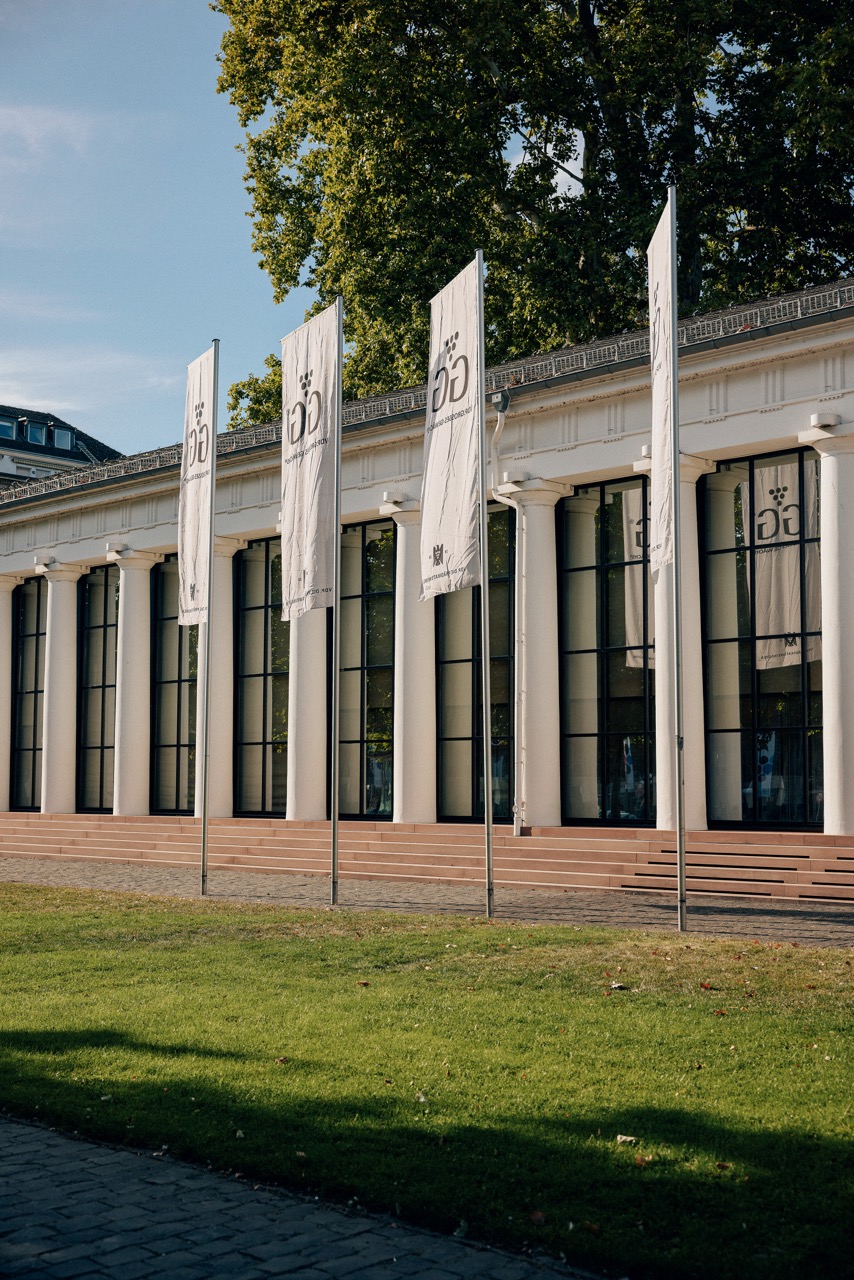
That is precisely what makes the Sneak preview VDP.GROSSES GEWÄCHS® one of the most sought-after events in the international wine calendar. From August 23rd to 25th 2026, representatives of the international press, the wine trade, and top-tier gastronomy will gather in the colonnades of the Wiesbaden Kurhaus. The focus this time will be on the white GGs from the 2025 vintage and the reds from the 2024 vintage – supplemented by more mature wines that their producers have deliberately allowed to age longer.
First-time attendees will experience an unusually focused tasting. Those who have been coming for many years are familiar with the ritual – but never with the outcome. With each vintage, the questions arise anew: How clearly does the terroir come through? How have the winegrowers interpreted the conditions of the year? What stylistic developments are emerging – and do the wines succeed in meeting the high standards of precision and artisanal quality?
Voices of the press, trade & blogposts
Paula Redes Sidore | jancisrobinson.com
Germany's GG releases in 2026 – Chardonnay, Silvaner and Weissburgunder
Germany's GG releases in 2026 – Spätburgunder
Helga Schroeder MS | Jasper Morris
Baden – Germany’s Home of the Burgundy Varieties
Jamie Goode | Wineanorak
Mosel Riesling: tasting through some of the best examples at the VDP tasting 2026
Rheingau Riesling: tasting through some of the best examples at the VDP tasting 2026
Pfalz Riesling: tasting through some of the top examples at the VDP tasting 2026
Anne Krebiehl MW | Vinous
2025 Rheinhessen-Nahe and Mittelrhein: Opulence, Clarity and Sweet Marvels
2025 Rheingau & Pfalz: Energy, Ripeness, Brilliance and Speed
2025 Mosel: The Full Gamut of Expression
Claude Kolm | The Fine Wine Review
2025 Pfalz Riesling GG Part I: Northern Pfalz
Jamie Knee | Petite Wine Traveler
Best German Wines 2026: My 20 Standout VDP.GROSSES GEWÄCHS Wines from Wiesbaden
Heidi Kleemola | Viinilehti
Viinilehti VDP. Grosses Gewächs -tastingissa – Saksan huippuviinit ensi-illassa Wiesbadenissa
Mona Haugen-Kind | VinArena
Forhåndsvisning VDP.GROSSES GEWÄCHS® 2026
Niels Lillelund | Jyllands-Posten
Det årlige syrebad i Wiesbaden var (næsten) aflyst
Fredrik Schelin | DinVinguide.se
VDP Wiesbaden 2026: Tyskland i toppform
Anthony Rose | The World of Fine Wine
VDP Grosses Gewächs Sneak Preview: The view from the top of the tree
Why it all starts with a vine
VDP.GROSSES GEWÄCHS® (GG) refers to the dry, top-quality wines from vineyards classified at the highest level of the VDP classification system: VDP.GROSSE LAGE®. It’s not simply a matter of declaring a particularly good wine a GG afterwards. The concept works the other way around: it all starts with the site.
A VDP.GROSSE LAGE® is a precisely defined vineyard with the potential – as evidenced by historical experience – to produce distinctive, outstanding wines across many vintages. Geology and soil play just as important a role as exposure, microclimate, water balance, and the vineyard’s integration into the landscape. Added to this are international reputation and worldwide recognition in the market. Great vineyards must have proven themselves over a long period of time – both in the vineyard and in the glass. After all, an exceptional vintage alone does not make a great vineyard.
At the same time, a VDP.GROSSES GEWÄCHS® is never created by the vineyard alone. For every VDP.GROSSES GEWÄCHS®, the grape varieties are also defined based on experience, tradition, and careful observation to ensure they are suited to that specific site. Yields are limited, and the grapes are harvested selectively by hand. In the vineyard, this requires precise work, often plot by plot and ripeness level by ripeness level. In the cellar, the focus is then on bringing out the character of the raw material as clearly as possible.
The standards are high: A VDP.GROSSES GEWÄCHS® should express the unique character of its vineyard site with exceptional clarity and precision. The winegrowers’ task is to distill the character of the vineyard site into the wine – using experience, meticulous craftsmanship, and a keen sense of the conditions of each vintage.
Where excellence is put to the test
Precisely because VDP.GROSSES GEWÄCHS® represents the pinnacle of the classification system, a winery’s decision alone is not sufficient. The wines undergo a multi-stage evaluation process. This includes two blind tastings: one while the wine is still young and another after bottling. Only when the wine meets the quality and stylistic requirements may it bear the VDP.GROSSES GEWÄCHS® designation.
The process is deliberately rigorous. After all, a classification remains credible only if even its very top tier is repeatedly put to the test. A glance at the proportions reveals just how small this top tier actually is: About 5 percent of the production from VDP.Estates is bottled at the highest classification level, VDP.GROSSE LAGE®. This category includes not only the dry VDP.GROSSE GEWÄCHSE® but also the Prädikat wines from these vineyards.
Added to this is a factor that cannot be rushed: time. White GG wines may generally be released no earlier than September 1st of the year following their harvest; red wines are allowed to age for an additional year before bottling.
Within the regions, the wines are further sorted from young to mature. This allows the wineries themselves to decide when they consider a wine ready for release. At the same time, this order facilitates direct comparison of different vintages and stages of development.
30 years of work on origins
The question of how to clearly and reliably identify and describe a wine’s origin has been a focus of the VDP for decades.
In 1996, the General Assembly in Speyer adopted the manifesto “Securing Wine Cultural Heritage for the Future.” In it, the association called for the most valuable German vineyards to be clearly identified and for origin to once again become a key benchmark for top quality. Over the following decades, this idea gradually evolved into today’s VDP classification.
Thirty years later, the discussion extends far beyond the association. With the amendment to the Wine Ordinance, the designations “Erstes Gewächs” and “Großes Gewächs” are now also given a legal framework. Going forward, they are to be managed by the committee “Klassifikation Erster und Großer Lagen in Deutschland e. V.,” jointly founded by the German Winegrowers’ Association (DWV) and the VDP.
This is an important step for Germany’s top wines – but not the end of the story. The decisive factor will be how strict, transparent, and regionally differentiated the rules are designed to be. The question from 1996 therefore remains relevant: What defines a great terroir – and how can its status be permanently safeguarded?

Wiesbaden: compare before the market decides
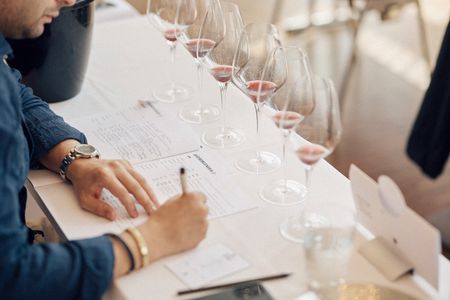
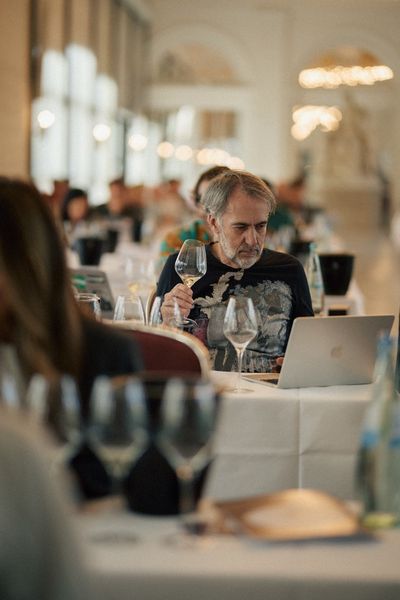
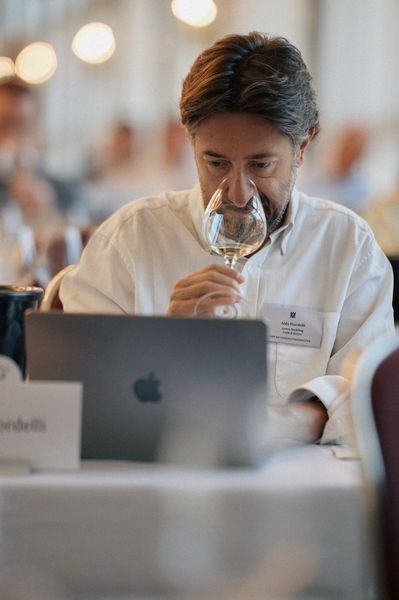
The sneakpreview is not a traditional wine fair. During the tasting, the winegrowers do not stand behind tasting tables explaining their wines. Instead, the GG wines stand on their own.
To this end, conditions are created that allow for the most focused comparison possible. The bottles are tasted in advance, the wines are brought to the appropriate temperature, and served upon request.
The tasters decide for themselves what is poured and in what order. This allows, for example, several wines from a single vineyard, region, or grape variety to be compared side by side.
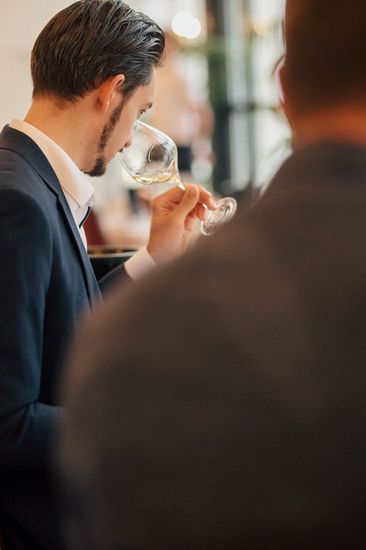
This is particularly crucial for young GG wines. Not every wine has already opened up by August. Some still seem closed off, while others reveal their structure more clearly than their aromatic profile. Those who evaluate them now, therefore, describe more than just what is immediately detectable on the palate. Experience is key: How is the wine structured? What tension does it possess? How do acidity, structure, and fruit interplay? And what potential for development can already be discerned?
That is why the preview is aimed at a carefully selected international audience of experts who are capable of making these comparisons and anticipating the wines’ potential. Their assessments subsequently have an impact far beyond Wiesbaden: in publications and reviews, in retail and in the restaurant industry—and also feed back into the VDP’s discussion of its own vineyards. After all, a classified appellation must continually prove its worth.
FACTS AND FIGURES
594 VDP.GROSSES GEWÄCHS® wines went through the tasting process this year, earning the right to come onto the market on September 1st, 2026. A total of 594 wines classified as VDP.GROSSES GEWÄCHS® are registered and will be presented for tasting at this year’s VDP.GROSSES GEWÄCHS® preview in Wiesbaden. These wines were produced in 210 sites.
By Variety | Wines | In Percent | By Region | Wines | In Percent |
Riesling | 337 | 56,7% | Ahr | 28 | 4,7% |
Spätburgunder | 131 | 22,1% | Baden | 91 | 15,3% |
Weißer Burgunder | 38 | 6,4% | Franken | 56 | 9,4% |
Silvaner | 26 | 4,4% | Mittelrhein | 10 | 1,7% |
Grauer Burgunder | 23 | 3,9% | Mosel-Saar-Ruwer | 44 | 7,4% |
Lemberger / Blaufränkisch | 19 | 3,2% | Nahe | 36 | 6,1% |
Chardonnay | 17 | 2,9% | Pfalz | 110 | 18,5% |
Frühburgunder | 3 | 0,5% | Rheingau | 80 | 13,5% |
|
|
| Rheinhessen | 64 | 10,8% |
|
|
| Sachsen/Saale-Unstrut | 14 | 2,4% |
| Württemberg | 61 | 10,3% | |||
TOTAL | 594 | 100% |
| 594 | 100% |
The 2025 White Wine Vintage: A fast-paced fall
For the white VDP.GROSSES GEWÄCHS® wines of the 2025 vintage, one factor was crucial above all else: the right time to harvest.
Following a brisk start to the growing season, the severe late frost that had characterized the previous year in many areas was largely absent. Warm and sunny spells spurred early development. Regionally, periods of rain in the summer fostered additional growth, but at the same time required careful foliage management and close monitoring of grape health.
Ripening, in particular, progressed rapidly. In some places, the first batches were harvested as early as August. The long, intermittent fall of 2024 gave way, a year later, to a remarkably compact harvest window in many regions.
For the winegrowers, this meant making decisions in quick succession: Which plot is ripe now? Where does it still need time? Where exactly are ripeness and acidity in the desired balance? And where does a change in weather require swift action?
Especially in VDP.GROSSE LAGE® vineyards, where even the slightest differences within a single vineyard can be decisive, 2025 demanded experience and precise timing.
Yields vary by region and are limited in many places. At the same time, VDP estates report concentrated, clear wines with ripe fruit, vibrancy, and a precise acidity profile. In Wiesbaden, it is now possible for the first time to assess on a larger scale how these characteristics manifest in the GG wines – and how clearly the individual terroirs have retained their distinctiveness despite the early vintage.
Those tasting the wines at the preview these days are doing so against a unique backdrop: The summer of 2026 ranks among the hottest and driest ever recorded in Germany—with a new all-time heat record, significantly too little rain throughout the entire growing season, and an exceptionally high number of hours of sunshine. It is precisely this contrast that makes the 2025 vintage all the more interesting: Despite a similarly warm growing season, the wines still exhibit the cool elegance, precise acidity, and freshness typical of German viticulture – that “cool-climate” character that is internationally regarded as a unique selling point. How long this character can be sustained in light of the developments of recent years is a question that is also on everyone’s mind in Wiesbaden.
The 2024 Red Wine Vintage: Patience was the order of the day
The year from which the current red VDP.GROSSES GEWÄCHS® wines originate unfolded quite differently.
2024 began with a mild winter and early budbreak. This was followed in April by a wave of frost that affected numerous regions and caused significant damage in some areas. Some vineyards recovered through a second budbreak, while in other areas the losses remained substantial.
The frost was followed by warm weather and high humidity. The risk of disease increased, and work in the vineyards became correspondingly intensive. At the same time, the varying timing of budbreak meant that ripening also varied widely within individual regions and estates.
This gave rise to the “endless autumn” that many VDP winemakers reported after the harvest. While the first batches were already harvested by the end of August, the harvest continued well into October in other areas. Instead of a clear harvest window, there was waiting, testing, and repeated selection—and, time and again, the decision of which grapes had actually reached the desired condition.
For red wines, this slow development could also be a strength. Where selection was carried out consistently, wines with fine structure, freshness, and depth emerged. In the meantime, they’ve had another year to settle and develop.
In Wiesbaden, we are now seeing what has become of this challenging year. With Pinot Noir in particular, the focus is less on superficial power and more on balance, precision, and that inner tension that can sustain great red wines for many years.
Here’s how the vintage is shaping up right now
VDP President Steffen Christmann says:
“The 2025 vintage is characterized by exceptional complexity and density in its white wines. The low yields and fully ripe grapes have produced tremendous concentration. At the same time, the wines possess an invigorating acidity that lends this power tension and precision. This combination of ripeness, density, and freshness is something special—we haven’t experienced a vintage with such distinct characteristics in a very long time.
The 2024 Pinot Noirs also display very good concentration, yet come across as significantly more delicate. They combine density and length with a fine, elegant structure. It is precisely this interplay of substance and finesse that, in our view, makes this vintage particularly exciting and gives the wines a great sense of inner calm and length.”